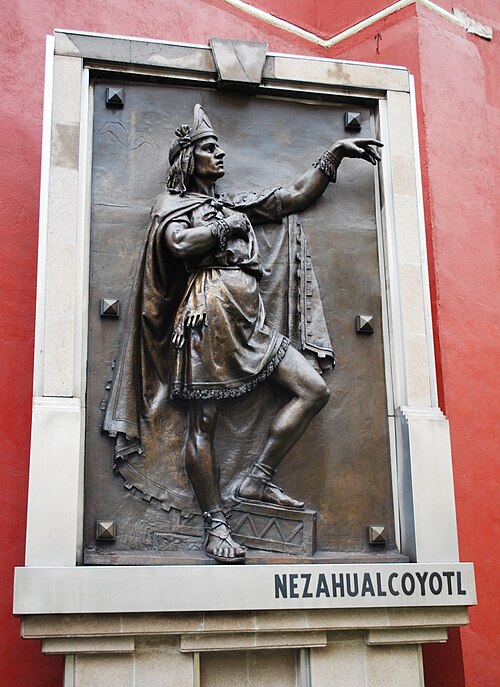
Nezahualcoyotl,
"Fasting Coyote" (April 28, 1402 – June 4, 1472) was a scholar, philosopher), warrior, architect, poet and ruler of the city-state of Texcoco in pre-Columbian era MexicoUnlike other high-profile Mexican figures from the century preceding the Spanish conquest of the Aztec Empire, Nezahualcoyotl was not fully Mexica; his father's people were the Acolhua, another Nahuan people settled in the eastern part of the Valley of Mexico, on the coast of Lake Texcoco. His mother, however, was the sister of Chimalpopoca, the Mexica king of Tenochtitlan. King Nezahualcoyotl is best remembered for his poetry; for his Hamlet-like biography as a dethroned prince with a victorious return, leading to the fall of Azcapotzalco and the rise of the Aztec Triple Alliance; and for leading important infrastructure projects, both in Texcoco and Tenochtitlan; and exceptional intelligence. According to accounts by his descendants and biographers, Fernando de Alva Cortés Ixtlilxóchitl and Juan Bautista Pomar, he had an experience of an "Unknown, Unknowable Lord of All". Nezahualcoyotl built an entirely empty temple to this God, in which no blood sacrifices of any kind were permitted, while allowing the standard sacrifices to continue elsewhere.
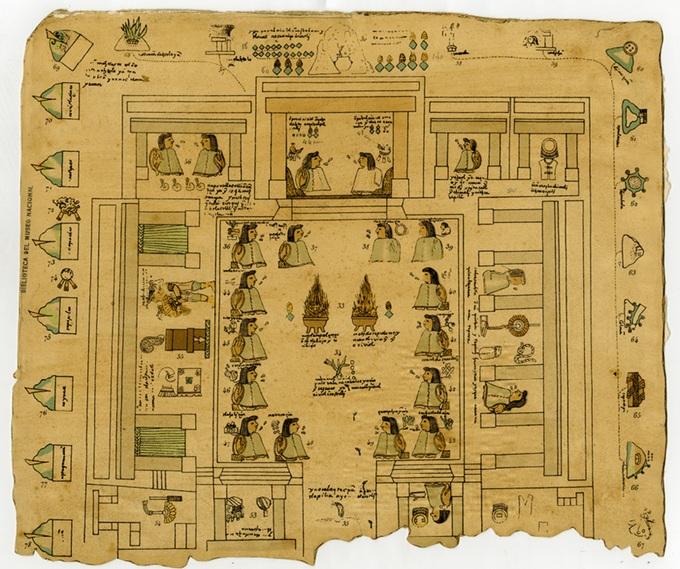
PICTORAL DOCUMENTS Plan of Nezahualcoyotl's palace, depicted on leaf 2 of the Quinatzin Map (1891 reproduction) One of the most important primary sources we possess to understand the history of pre-Columbian Texcoco is a manuscript painted sometime in the early 1540s, during the early Colonial period in Mesoamerican history, known as the Codex Xolotl.
It is a cartographic history document made in Texcoco, described by historian Lorenzo Boturini Benaducci as "a map of exquisite delicacy," as it is the most extensive of three Texcocan cartographic histories known to exist, the other two being the Quinatzin Map and the Tlohtzin Map, both of which were also made in the 1540s. An annotation in Spanish attributes the ownership of the Tlohtzin Map to a certain don Diego Pimentel, who was a descendant of Nezahualcoyotl.
Codex Xolotl probably adapted or copied from an early 15th-century manuscript which would have been commissioned by Nezahualcoyotl himself as a document to legitimize his rule "through stories about migrations, marriages, births, deaths, dynastic successions, usurpation, battles, treason, ambushes, murders, imprisonment, and so forth." All three of the mentioned documents (Xolotl, Quinatzin and Tlohtzin) are characterized for being written "without words," i.e., in iconic script, though this does not imply they cannot be read, as, while words are not recorded as they would be using an alphabet, they communicate meaning through the textual traditions of the people who made them, as Douglas (2010) finds in his study.
These manuscripts were used by historians such as Fernando de Alva Ixtlilxóchitl in the 17th century and continued changing hands following Ixtlilxóchitl's death, until ultimately arriving at Europe in the 1840s while under the possession of a French scientist profoundly interested in Mexico's past, Joseph Aubin. All three of these manuscripts are currently housed at the Bibliothèque nationale de France The analysis of Codex Xolotl requires careful examination, however, as it was made with the intent of glorifying the descendants of King Xolotl, that is, the dynasty which ruled Texcoco, thus underestimating the merit of other peoples who inhabited the Valley of Mexico who are described in the code
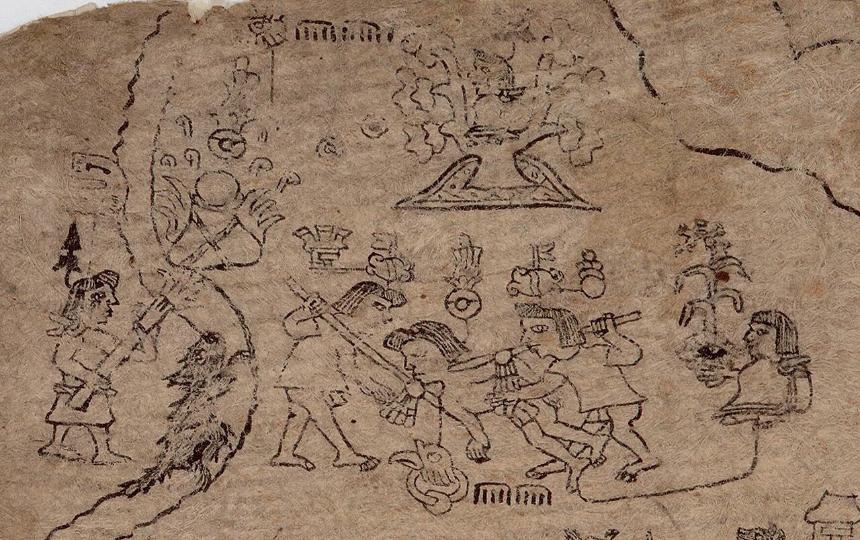
The young Nezahualcoyotl, hiding between the branches of a tree (shown at the top), witnessing his father's assassination, as depicted in Codex Xolotl (c. 1541)
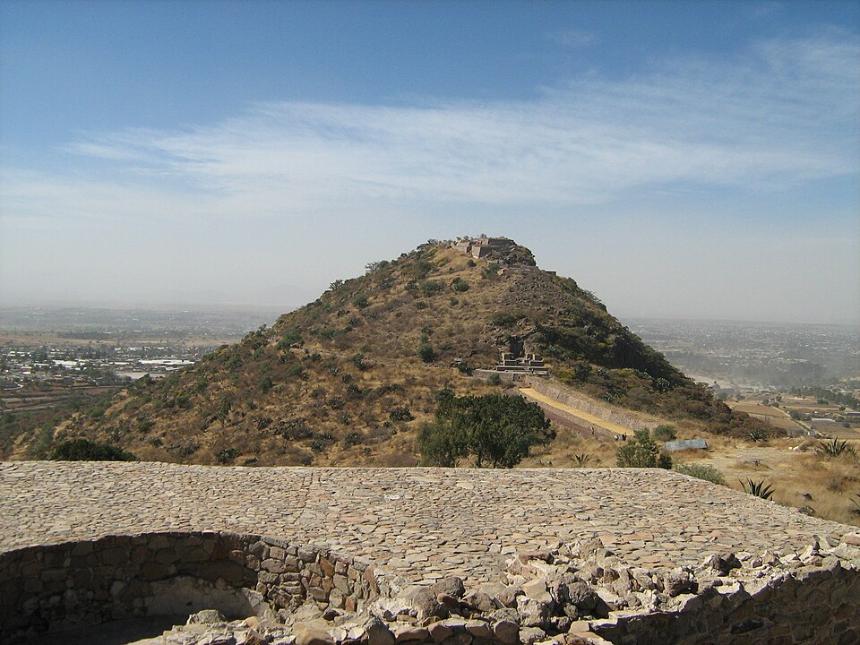
Panoramic view of the remains of Nezahualcoyotl's "baths" at Texcotzingo
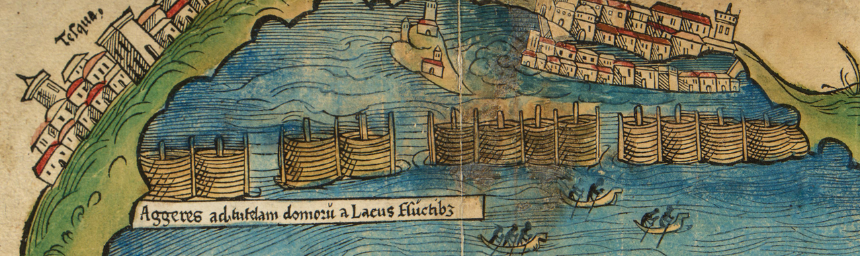
Detail of Nezahualcóyotl's dike to control water levels around Tenochtitlan, as depicted by the map of the city printed in 1524
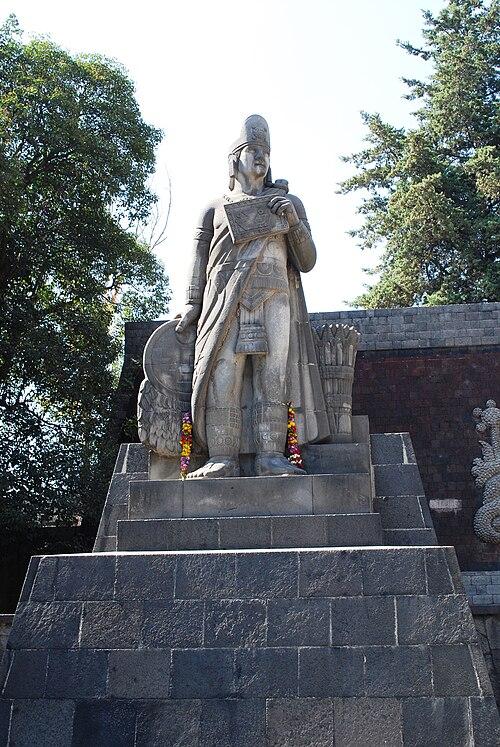
Monument to Nezahualcoyotl in the Bosque de Chapultepec
One of Nezahualcoyotl's historical legacies is as a poet, with a number of works in Classical Nahuatl written in the 16th and 17th centuries ascribed to him. These attributions are testament to the long lifespan of oral tradition, since Nezahualcoyotl died almost 50 years before the Spanish conquest of the Aztec Empire, and the poems were written down another fifty years after that. Juan Bautista de Pomar was a grandson of Nezahualcoyotl and likely wrote them from memory of the oral tradition. Poems attributed to Nezahualcoyotl include: In chololiztli icuic (Song of the Flight) Ma zan moquetzacan (My Friends, Stand Up!) Nitlacoya (I Am Sad) Xopan cuicatl (Song of Springtime) Ye nonnocuiltonohua (I Am Wealthy) Zan yehuan (He Alone) Xon Ahuiyacan (Be Joyful